I LOVE MY CHILDREN. I AM ALSO COMPLETELY EXHAUSTED. An Honest Conversation About Parental Burnout, Compassion Fatigue & What Recovery Actually Looks Like When You're Raising Neurodivergent Kids
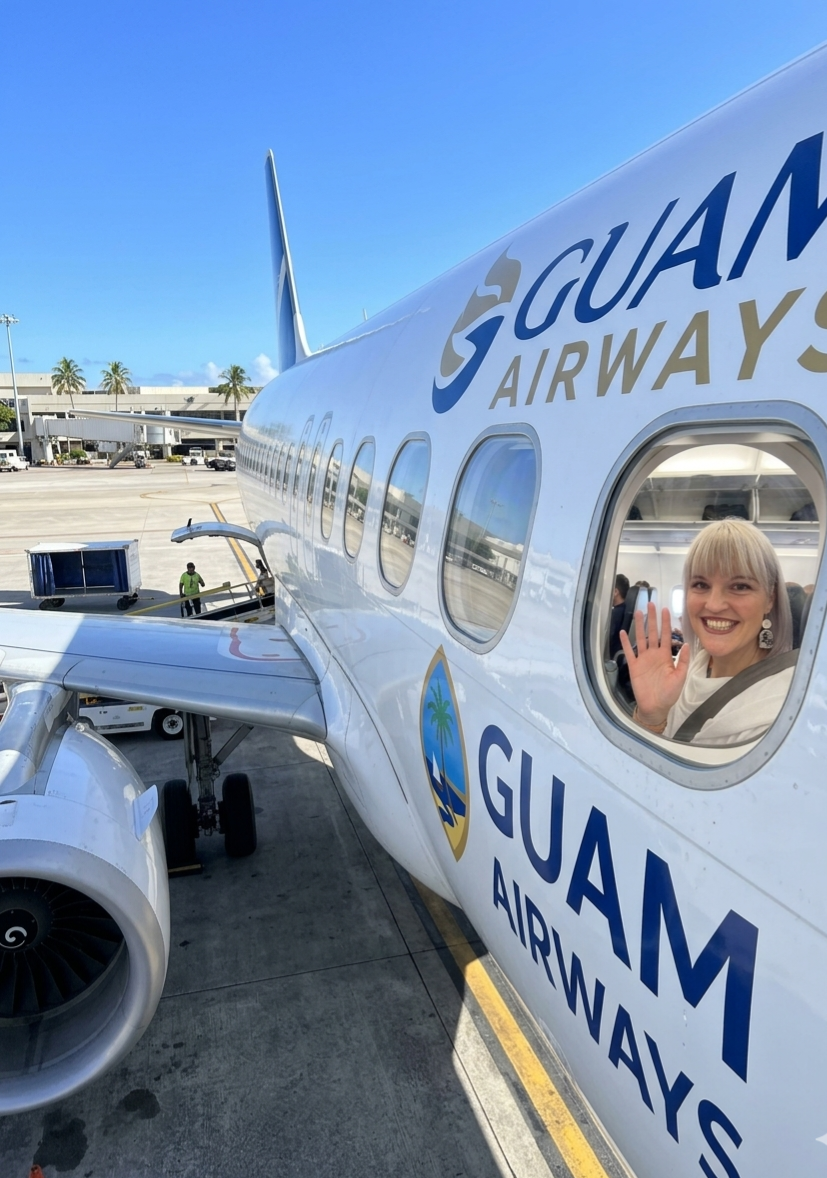
By Andrea Grant | Neurodiversity Coach, Educator & Woman Who Has Been Hugged on the Toilet More Times Than She Would Like to Admit.
Let me set the scene. It is 6AM. I am standing at the stove, attempting to assemble something nutritious for three children with three entirely different relationships with food, three entirely different morning energy levels, and three entirely different opinions about what constitutes an acceptable start to the day.
From the passage comes the sound of humming. Rhythmic, committed, completely unconscious humming — the kind that bores directly into your cerebral cortex after approximately forty-five seconds. This is my son Harrison, and he is making his way towards the kitchen, blissfully unaware that his school-avoidant, deeply unimpressed teenage sibling is also heading in the same direction from the opposite end of the house, radiating the specific energy of someone who has already decided that today is going to be a problem.
I have approximately eleven seconds to redirect one of them before they collide and the entire morning detonates. I achieve this with my hands still in the oats. Obviously.
Then, from behind me, with the quiet approach of a particularly affectionate ninja: arms around my waist. Face pressed into my back. The specific weight of a child who needs, right now, in this moment, to be held."Mommy."This is hug number four. It is 6am. We have been awake for forty minutes.
What Burnout Actually Looks Like in This House
There is a version of parental burnout that gets talked about in wellness content — the kind where a tired parent needs a spa day and a glass of wine and perhaps a weekend away. I do not wish to be unkind about this version. Rest is important. Spa days are lovely. I have nothing against wine.
But that is not the burnout I am talking about. The burnout that comes with raising neurodivergent children is a different creature entirely. It is structural. It is chronic. It is the accumulated weight of a thousand small demands, each of which is entirely manageable in isolation, and collectively constitute something that could bring a reasonably competent adult to their knees by Wednesday.
It is running three separate morning routines with military precision so that a school-avoidant, magnificently grumpy teenager doesn't cross paths with their younger brother — who hums — or their younger sister, who has fully embraced her identity as a princess, says exactly what she thinks at exactly the wrong moment, and has the diplomatic instincts of a golden retriever. Every. Single. Morning.
It is the lack of interoception that means my pedicure — which I paid actual money for and which I deserve — is routinely destroyed because children with interoceptive differences do not register where their feet are in space and therefore cannot register that they are standing on mine. If I do not wear shoes in my own home, I will lose a toe. This is not hypothetical. This is a risk assessment I perform daily.
It is my car, which has seen things. More dents than I care to disclose, accrued during journeys where I am required to be simultaneously a safe and attentive driver AND an active participant in three completely unrelated, rapidly rotating conversations — because I have three children who each have a subject they are passionate about, and while I have now successfully implemented a hand-raising system so they take turns, I must still be prepared at any moment to leap from marine biology to Minecraft to whatever social injustice my youngest has identified today, with my 43-year-old brain simply expected to keep up.
It is also — and I share this with love, genuine love, and only a very small amount of barely contained hysteria — my son's current communication style, in which he has taken to vocalising every single punctuation mark in a sentence. Every. Single. One."I need to take a box to school tomorrow, comma, do you have one, question mark." I told him that as a former English teacher and current writer, I have an enormous appreciation for his command of the English language.
I also told him that I am looking into Harrison-sized shock collars. He took this in excellent spirits, which is fortunate, because I was only forty percent joking.
The Hug Situation
I want to talk about the hugs because I think it captures something essential about this specific kind of burnout that nothing else quite does. Olivia co-regulates through physical contact with ME. This is common in neurodivergent children — touch, for many of them, is not just comforting but neurologically necessary. It genuinely helps regulate their nervous system. It is, in the clinical sense, therapeutic.
On a bad day, I receive up to thirty hugs. Thirty. In the bathroom. In the kitchen. At the stove. Mid-conversation. Mid-task. Once, memorably, while I was on the toilet — door apparently being a social construct we are choosing not to observe today — and another time with both hands coated in raw mince because I was mid-meatball and the meatballs did not care about the emotional needs of my child.
For a long time, I put everything down. Every single time. Because I loved my child and I understood why they needed it and I knew the research and I knew that connection was the foundation of regulation and I was, dammit, going to be the mother who was always available.
What I did not account for was what this would do to my own nervous system over time. Because here is the thing about always being available for physical contact: your body stops feeling like yours. And when your body stops feeling like yours, something quietly breaks. Not dramatically. Not all at once. Just a slow, incremental erosion of the sense that you exist as a person rather than a resource.
It took me longer than I'd like to admit understanding that honesty was not just acceptable here — it was actually what Olivia needed from me. Not a mother who pretended to be endlessly available. A mother who was real.So I started saying it. "Mommy cannot hug you right now. Mommy is on the toilet. Mommy has mince on her hands. Mommy is, just for five consecutive seconds, trying to feel like she owns her own body."
And here is what surprised me: Olivia received this better than the performance of availability ever landed. Because neurodivergent children — particularly PDA children — have finely calibrated radar for inauthenticity. They know when you're pretending. They don't always know what you're pretending about, but they feel the dissonance, and it dysregulates them further.
Honesty, delivered with love, was more regulating than a hug I didn't have to give. That was a significant lesson. I'm still learning it.
Meanwhile, in the Public Domain
I should mention Olivia's current stims. Because burnout does not only happen at home, and I would be doing you a disservice if I only described the domestic version. Olivia's current stims — which arise particularly when they are anxious, and which they also deploy at home for regulation — include, but are not limited to, shouting: "I WANT DRUGS."And: "I'M GOING TO BURN THIS PLACE TO THE GROUND." Loudly. In public. In shops. In queues. At the pharmacy, once, which created an atmosphere I can only describe as electric.
Olivia has only ever taken prescription medication from their psychiatrist. The stim is not a statement of intent. It is a nervous system doing what nervous systems do — finding a release valve. I understand this completely. I am also aware that the woman behind us at Checkers does not have this context, and the expression on her face suggested she was considering whether to call someone... Someone who may have arrested me, that is.
We have developed what I can only call a very efficient explanation system. I am fast. I am practiced. I keep my face very calm while internally recalibrating my entire afternoon.This is burnout too. The constant readiness. The perpetual management of other people's perceptions. The energy spent explaining, contextualising, translating — not just your child's behaviour, but your own responses to it.
The Pronoun Fines Scheme: A Cautionary Tale
When Olivia came out as non-binary, I was — and remain — fully, unconditionally supportive. They/them pronouns. Done. Easy. Important. Getting three generations of family and a social circle of varying ages and linguistic flexibility on board with consistent pronoun use has been, let us say, a process.
In a moment of what I genuinely believed was inspired parenting creativity, I instituted a fine system. Incorrect pronoun used accidentally? You owe the jar. It was playful. It was low-stakes. It was, I thought, rather clever.
What I did not anticipate was that the fine jar would become its own source of household tension, that the constant monitoring required to enforce it would become yet another task on my already geological to-do list, and that I would eventually reach a point where the mere mention of the fine jar made me want to pack a single bag, book a one-way flight, and start a new, significantly quieter life in Guam.
The pronoun jar remains. I remain. Guam remains, tantalisingly, a possibility.
And Then There Was Harrison and the Bazooka
Last week, Harrison — who is a masterful storyteller with an alarmingly convincing poker face — informed his younger, somewhat credulous sister that their grandmother had been shot by a bazooka. He used song lyrics as his source material. He delivered this information with complete composure. His sister, who trusts her brother with a devotion that is both touching and, apparently, catastrophically misplaced, was reduced to genuine tears before I could intervene.
I dealt with this calmly. I explained to his sister that her grandmother was, in fact, alive and had not been struck by any kind of heavy artillery. I explained to Harrison that his gifts for narrative and deadpan delivery are genuinely impressive and will serve him well in life but must be deployed with greater ethical consideration. Then I went and stood in the garden for a few minutes.
This too is burnout. Not the dramatic kind. The quiet, slightly unhinged kind where you find yourself standing outside staring at a wall because it is the only surface in your immediate environment that is not making a demand of you.
What the Research Says
I want to step briefly out of the anecdotes and into the evidence, because I think it matters that parents understand this is not a personal failing. This is a documented, measurable, physiological reality.
Research consistently shows that parents of neurodivergent children — particularly those with autism — experience significantly higher rates of stress, anxiety, depression, and burnout than parents of neurotypical children.
A landmark 2009 study by Seltzer and colleagues found that mothers of autistic children had cortisol patterns similar to those of combat soldiers. Not metaphorically similar. Physiologically similar.
Compassion fatigue — the emotional and physical exhaustion that comes from sustained caring for others in distress — is endemic in our community. It is the cost of showing up, day after day, with all of yourself, for children whose needs are significant and constant and don't take weekends off.
The specific features of neurodivergent parenting that contribute to burnout include: chronic sleep disruption, sensory hypervigilance, the emotional labour of advocacy, the social isolation that comes from having a family life that is genuinely hard to explain to people who haven't lived it, and the relentless nature of a job that has no shift end.
In South Africa, there is the additional layer of doing this with limited resources, significant financial pressure, and a healthcare and education system that is not reliably set up to support you.
What Recovery Actually Looks Like
I want to be honest about this, because I think the wellness industry does burnout recovery a disservice by making it look like a retreat and a green smoothie.
Recovery from parental burnout is slow. It is unglamorous. It does not happen during a single weekend away, though a single weekend away is not nothing and should absolutely be taken if offered.
Real recovery, in my experience and in the research, looks like this: Radical honesty about your limits. Not performing okayness. Not pretending you have more to give than you do. Saying, to your child, your partner, your support network: I am running low. Olivia can handle my honesty. Your child, very likely, can handle yours.
Reclaiming micro-moments of selfhood.Not hours. Minutes. Five minutes in the garden. A cup of tea that you drink while it is still hot. A shower that is purely for you. These things sound laughably small. They are not small. They are the difference between sustainable and not.
Community.
The single most protective factor against parental burnout, according to research, is connection with people who genuinely understand your experience. Not people who say "I know exactly what you mean" and then describe their neurotypical child's occasional bad mood. People who know the difference between a meltdown and a tantrum. People who understand the nugget discourse. Find them. Hold onto them.
Professional support.
For you, not just your child. Therapy. Coaching. A GP who takes your mental health as seriously as your child's. At www.parentingonthespectrum.co.
Permission to not be okay.
This one is perhaps the hardest. We are so conditioned to perform competence, especially as parents of children who already attract scrutiny, that admitting we are struggling feels like confirming every negative assumption anyone has ever made about our parenting. It does not confirm that. It confirms that you are human. That is allowed.
What I Want You to Know
I love my children with a ferocity that surprises me sometimes. I would do all of it again — the thirty hugs, the punctuation narration, the bazooka incident, the public stims, the mince-covered embraces, the pronoun jar, the pedicure casualties, all of it — without hesitation.
And I am also tired. Genuinely, structurally, deep-in-my-bones tired. Both of these things are true simultaneously, and they do not cancel each other out.
You are allowed to be completely devoted to your children and also completely exhausted by them. You are allowed to find this hard. You are allowed to stand in the garden staring at a wall occasionally, just because it is the one surface that isn't asking you for anything.
You are not failing. You are doing one of the hardest jobs there is, largely without adequate support, in a world not built for your family. That deserves acknowledgment. That deserves rest. That deserves, at the very minimum, a cup of tea you actually get to finish.
Go make one. I'll wait.
Andrea Grant is a qualified neurodiversity coach, educator, and mother of three children, two of whom are neurodivergent, based in Cape Town. She offers home coaching, school advocacy, parental burnout support, and workshops across South Africa. Because parents need support too.