Why I'm Swiping Left on ABA: A Love Letter to Neurodiversity (and Sanity)
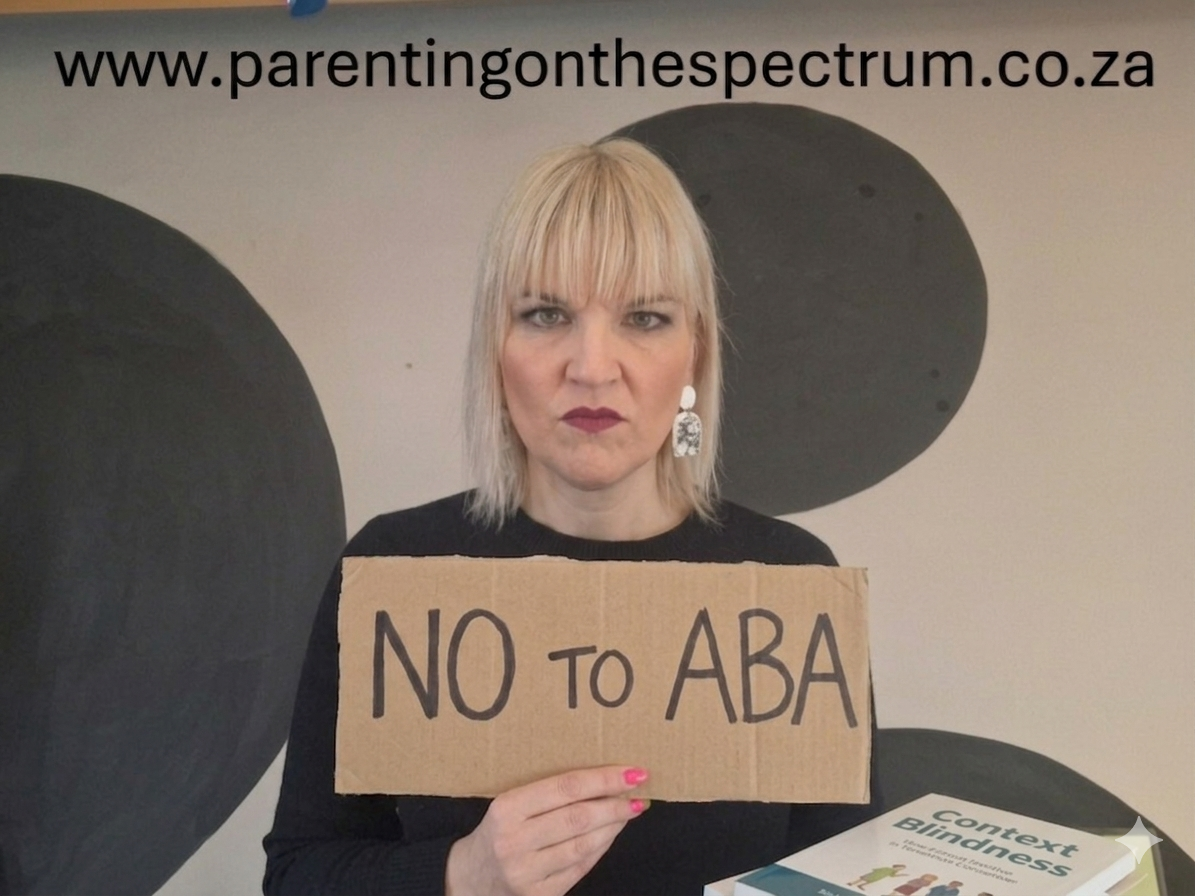
By Andrea Grant Educator, Child and Adolescent counsellor, Autism Coach, Mom, and Professional Plate-Spinner
If you’ve spent five minutes in the world of autism, you’ve heard of Applied Behavior Analysis (ABA). It’s often marketed as the "Gold Standard"—which, in South Africa, usually means it costs as much as a generator during a Stage 6 power outage and promises to keep the lights on in your child’s brain.
But as an educator and a mom to two neurodivergent humans (one neurotypical), I’ve decided to stop following the "standard."
Here is why I have officially broken up with ABA, and why you might want to reconsider that expensive "gold" subscription.
So, What Exactly is ABA? (The "Robo-Kid" Factory)
At its core, ABA is based on behaviorism. Imagine training a puppy: "Sit" equals a treat; "Jump" equals a firm "No."It breaks down social skills and behaviors into tiny tasks, rewarding the "correct" ones and ignoring or discouraging the "wrong" ones until the child performs them automatically.The goal? To make an autistic child appear as neurotypical as possible. We call this masking.In professional terms, it’s "behavior modification." In my terms, it’s trying to force an entire pizza into a tiny Tupperware container—it’s exhausting, messy, and eventually, the lid is going to pop.
The "New" Evidence: It’s Not Just My Gut Feeling
I’m a fan of gritty realism (give me a psychological thriller over a rom-com any day), and the latest research in the journal Autism is as gritty as it gets.
A massive study of over 17,000 youth found that those receiving ABA had 30% higher odds of being hospitalized for mental health crises compared to those who didn't. We aren't talking about a little "stubbornness"; we are talking about acute distress.
If a car had a 30% higher chance of exploding on the N1, we’d stop driving it.So why are some people still "driving" this therapy into our kids' lives?
The PDA Problem: Why Compliance is a Dirty Word
I specialize in Pervasive Demand Avoidance (PDA). If you try to use "compliance-based" therapy on a PDAer, you’re not just barking up the wrong tree; you’re barking at a tree that is currently planning its escape from the garden.
ABA relies on a hierarchy: The therapist is the boss, the child is the subject. For a PDA child, a direct demand feels like a physical threat. Standard ABA tactics—like "Quiet hands" or "Look at me"—can trigger a massive "fight or flight" response.
In South Africa, we have a culture that often values "children must be seen and not heard" (my mother was a HUGE fan). But my kids—and yours—deserve to be heard, even if they aren't speaking.
Why I’m Choosing Connection over Compliance
In my workshops, I teach "The South African Way"—which is basically figuring out how to make a braai work even when it’s pouring rain.
We don't need "behavioral rewards" (which, let’s be honest, often turn into "bribery with Smarties").
We DO need:
Low-Arousal Approaches: Dropping the demands and picking up the humour. I'm big on humour. It has de-escalated many a volatile situation in my house...and my car actually. But that's a story for another day.
Autistic Joy: Celebrating the "stims" and the deep interests rather than pathologizing them as "interfering behaviors".
Safety First: Recognizing that "good behavior" is often just a child who is too terrified to be themselves. I spent my childhood being a 'good girl' and it came at a great cost. It took me years to become independent and figure out who I was. My kids know that they are unique and I encourage them to own that.
The Final Verdict
I’ve spent two decades watching kids thrive when they feel safe and understood, not when they’ve been "trained" to perform. We don't need our kids to be "less autistic." We need a world that is less rigid.
So, if you’re feeling pressured to sign up for 40 hours of ABA a week because "that’s just what you do," take a breath. Put the Smarties away. Let’s focus on building a life that actually feels good to live, rather than one that just looks "normal" from the outside.
After all, "normal" is just a setting on a washing machine—and we’re way more interesting than laundry.
