The Wall of Silence: Why is Neurodiversity still the "Invisible" Subject? 🧠🚫We’ve got posters for the Water Cycle and the Alphabet, but nothing to explain why "Daniel" won't pick up a snotty tissue. If the curriculum won't do it, I will. Andrea Grant
The "Invisible" Student: Why are we still using posters from the Bronze Age?
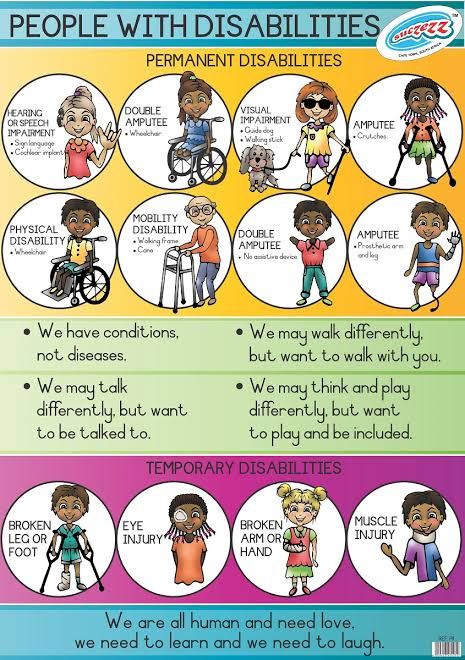
If you stepped into a primary school classroom today, you’d likely find the usual suspects plastered on the walls: a color wheel that hasn’t changed since Newton, an alphabet frieze featuring an "X" for Xylophone (because what else is there?), and maybe a dusty map of the world , multiplication tables for sure, the seasons, some weird illustrations of various emotions that none of my children have ever claimed to relate to (students or biological) and then, there’s The Poster. You know the one. I recently unearthed a relic in a "Mambo's" store—a "People with Disabilities" poster that looks like it was printed around the time Noah was waxing down the Ark.
It’s got that specific, slightly jaundiced yellow hue that only mid-century educational materials possess. To its credit, it actually mentions differences. It appeals to our humanity with lines like, "We want to walk with you" and "We want to play and be included." It’s sweet. It’s well-intentioned. It’s also about as relevant to the modern classroom as a chalkboard and a dunce cap.
The "At Least My Legs Work" Incident
I’ll be honest: I wasn't always the enlightened Neurodiversity Advocate you see before you. In Grade 3, a boy in a wheelchair called me "fat." My response? "Well, at least MY legs work! "Look, I’m not proud of it. I may have been meaner, actually. Memory is a fickle thing, but childhood spite is a precise instrument. If we’d had a poster explaining why he was in that chair, or better yet, a poster explaining why I was such a reactive little firebrand, maybe we both would have been less of a menace. But back then, "disability" was something you could see—a crutch, a hearing aid, or a missing limb. If your brain worked differently, you weren't "neurodivergent"; you were just "difficult," "rude," or "weird." Which, if we are honest, is very much still the case: unless you are in a school that is specifically for neurodiverse children... which a vast majority of children in South Africa just aren't.
The Daniel Dilemma
Fast forward through twenty years of teaching, and the posters haven't caught up. I’ve sat in staffrooms and classrooms in elite institutions where the walls are silent on the most prevalent "disabilities" in the room.
Take "Daniel." (Not his real name, but his brilliance was very real). Daniel was on the spectrum, hilarious, and possessed a brain that moved at approximately Mach 5. He hated waiting his turn. Why should he? Listening to his "arguably less intelligent" cohorts struggle through a basic sentence was, to Daniel, a form of neurological torture.Because I have two kids on the spectrum and specialize in Pervasive Demand Avoidance (PDA), I got him. We had a system. He’d message me on Teams—instant gratification achieved—and I’d reply while simultaneously explaining the nuances of Macbeth to thirty other kids. Teachers are the original multi-tasking OS; we were born to run background apps. But outside my classroom door? It was a disaster. Other teachers saw his refusal to pick up a stray, snotty tissue as "defiance." Daniel saw it as a biohazard. (He was right, by the way. It wasn't his snot. Why is the teacher the one demanding he touch a stranger's DNA?)
My "Not-So-Perfect" Solution
I asked myself: Why is this not taught? Why is there no reference point for the Grade 7s who were being nasty to Daniel because they didn't understand why he "got away" with things? Since I wasn’t "allowed" to give a formal presentation on Neurodiversity to the school (don't get me started on the politics of "not wanting to label kids"), my AI and I had a bit of fun this weekend. We made our own poster. It’s not perfect. It’s a work in progress. But it actually mentions Stimming. It mentions PDA. It explains that ADHD isn't just "bouncing off the walls," and OCD isn't just "liking things neat." It’s an attempt to bridge the gap between the "Classic Autism" trope and the reality of the brilliant, complicated, demand-avoidant humans sitting in our classrooms today. We are still using posters that teach kids how to identify a "Broken Leg or Foot." I think it’s high time we gave them a guide on how to identify—and respect—a brain that’s simply wired for a different frequency. Until then, I’ll keep my "sarcastic educator" hat on and keep building the resources the curriculum designers seem to have forgotten in the 1980s.