The Invisible Social Life: Why Your Neurodivergent Child Might Be Lonelier than they let on. - Andrea Grant
The "I’m Not Crying, You’re Crying" Guide to Neuro-Harmony
I recently went on a "Mommy Date." For the uninitiated, this is where I take one of my three children out solo to remind myself that I actually quite like them when they aren't fighting over the last yogurt or jostling for the metaphorical limelight like it’s a C-list red carpet. It’s like dating the "Greatest Hits" version of your offspring.
They’re charming, they’re polite, and they actually want you to enjoy their company. It’s a terrifyingly pleasant departure from the usual domestic warfare.
Yesterday, it was the turn of my eldest, Olivia. Liv is turning 16 this year, which is a confusing milestone. On one hand, they possess an emotional maturity that makes most adults look like toddlers in suits. On the other hand, if you say the word "boobs," Liv will devolve into approximately 20 minutes of hysterical, gasping laughter. We contain multitudes, clearly.
As a professional Autism Coach and a specialist in Pervasive Demand Avoidance (PDA), I spend a lot of time talking parents off the ledge regarding their child’s social life. The standard "expert" advice—and usually my own—is: Don't push. If your child seems okay in their own bubble, or if their social life exists entirely in "Pineapple" (Olivia’s dyslexic interpretation of Philadelphia), let it be. Online friends are real friends. Solitude isn't always loneliness.
But then Liv dropped a truth bomb over breakfast that made my "cool, detached professional" mask crumble into my cappuccino.
The Spy in the Playground
We were reminiscing about Liv’s first school—a period I remember as a "hot mess," and that’s being generous. Back then, I didn't know the term PDA. To the school, Liv was just "rude," "disruptive," and "aggressive." The solution? Constant punishment. Naturally.
I asked Liv about having no friends back then. I’d spent years telling myself, “It’s fine, Liv prefers their own company.” Liv looked at me and said, "I really wanted friends. But everyone thought I was weird and bullied me."
While I was busy rationalising their isolation, 4-year-old Liv was playing "Spy Games" and building fairy houses alone, not because they wanted to be a hermit, but because it was safer than being mocked for their stims or their outbursts. They were dealing with palilalia—that vocal stimming where they’d repeat words under their breath—and the other kids just didn't have the hardware to process it (OK, if I am honest, and do not judge me, some times it does sound like a clip from The Conjuring or The Exorcist or something. It can be a tad unnerving.)
The Fact Check:
Research shows that while many neurodivergent individuals do require more downtime, the "loner by choice" narrative is often a survival mechanism. According to recent studies on neurodiversity, the desire for social connection is just as high in autistic youth, but the "Double Empathy Problem" (a term coined by Damian Milton) creates a gap where neither side quite understands the other's signals.
Arming the "Weirdos" (With Love)
Last year, the tide finally turned. Liv started making "real-life" friends. When they asked if two of them could join our Easter Lunch this Sunday, I deadpanned a "Ja, that’s fine" while internally throwing a ticker-tape parade.
This is exactly why I’ve launched my Neuro-Harmony Workshops.
We can’t always change the world’s "factory settings" overnight. A vast majority of people are still scared of novelty and change. But we can equip our kids.
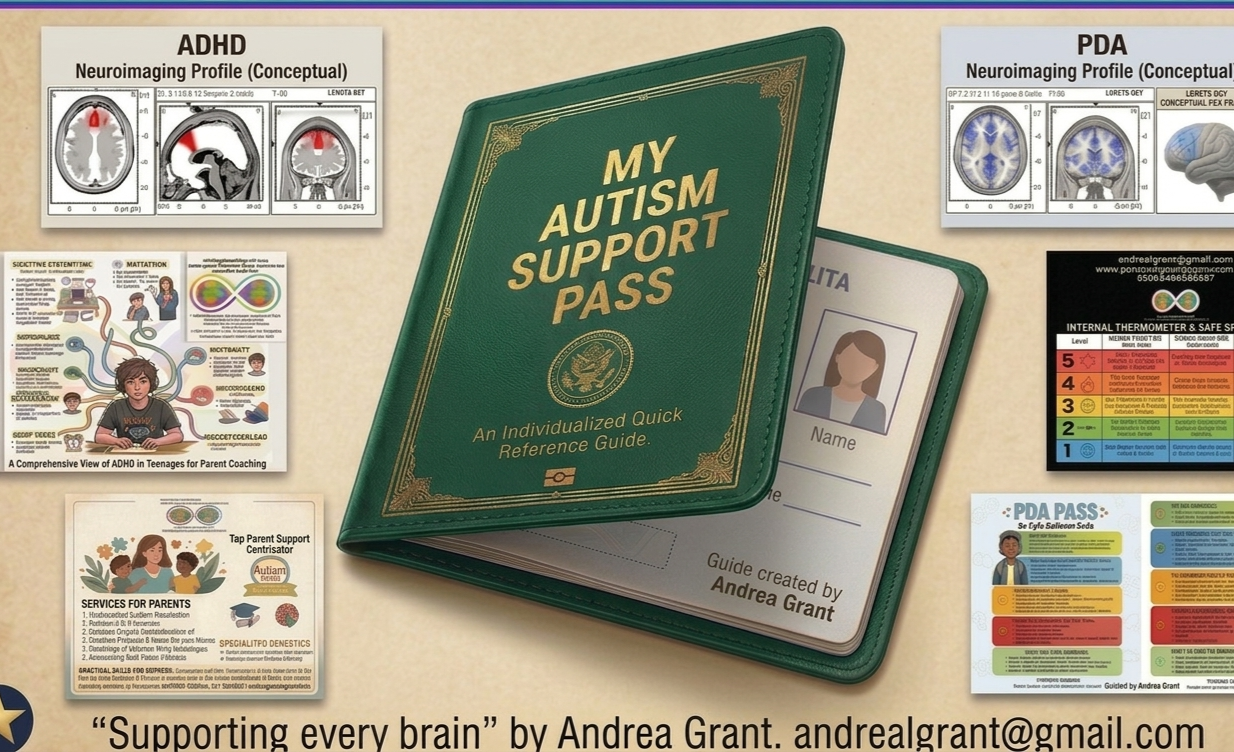
My mission isn't to "fix" the stimming or hide the PDA; it’s to help children understand their own sensory profiles and triggers. I provide my clients with Bespoke Autism Spectrum Passes—quick, accessible tools that allow a child to advocate for their needs without having to give a TED Talk every time they feel overwhelmed.
I want to arm our kids for a world that is still catching up to them. If you’re tired of the "wait and see" approach and want to help your child navigate the world with confidence (and maybe a few spy skills), sign up for a workshop today.
Let’s get our kids world-ready. Fairy houses are optional; self-advocacy is not.
Sign Up for Neuro-Harmony Workshops below: Empowering neurodivergent families to thrive, one "Mommy Date" at a time.
https://forms.gle/