The Interactional Vandal: What It's Really Like to Be a Grown-Up With PDA
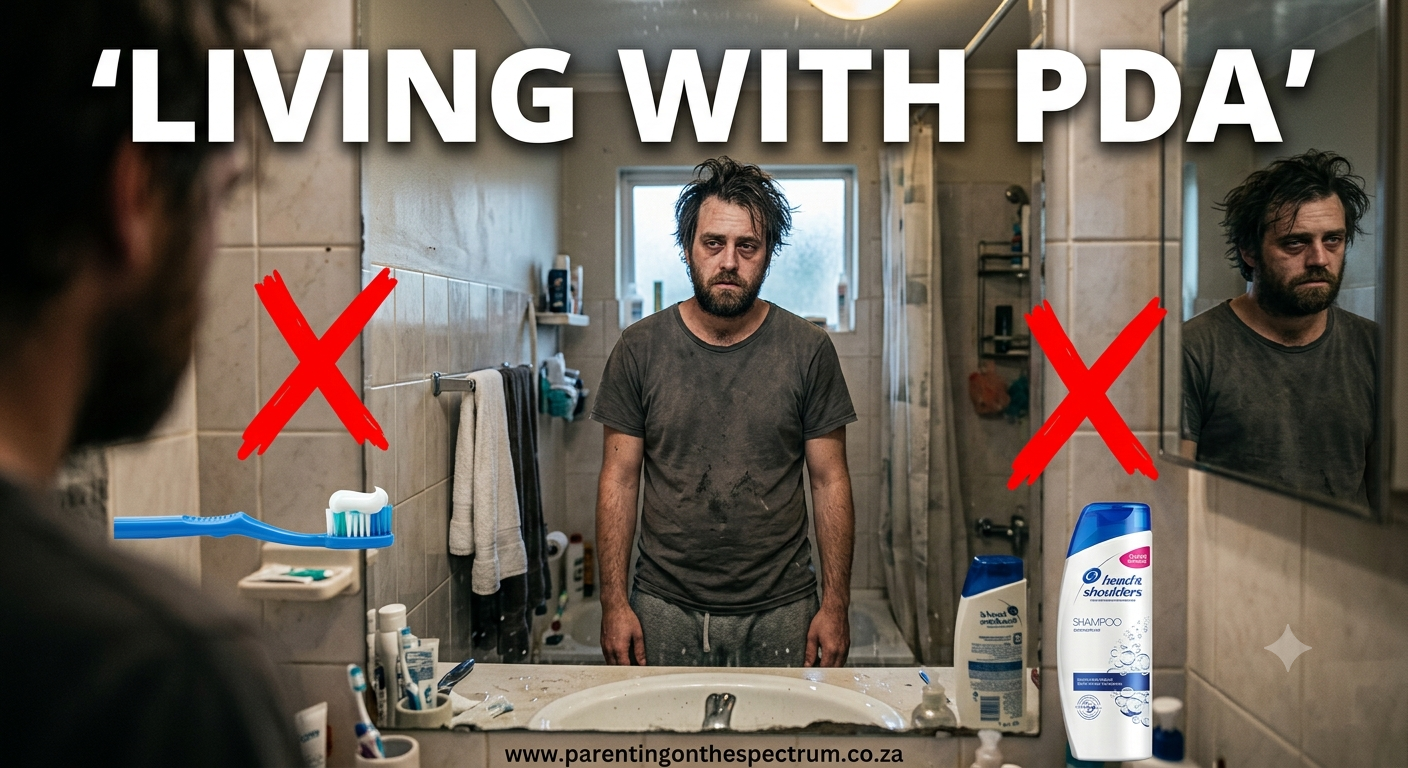
There is a particular kind of exhaustion that comes from spending thirty-odd years being told you're difficult, before anyone hands you the word that actually explains you. I often sit across from a client — a grown man, a father, a person who has quietly built an entire internal survival manual for a world that was never built with him in mind — and I am reminded, again, why I do this job.
He's one of a small handful of clients I now work with who are European by heritage but grew up in the Middle East.
Neurodiversity, as a concept, barely existed there when he was a child. There was no PDA, no autism, no "oh, that makes sense now." There was just a kid who didn't fit, labelled the way non-conforming kids get labelled everywhere when nobody has better language: naughty. Difficult. Too much. He grew up "odd" and stayed odd, quietly, into adulthood, without ever being handed the manual that might have made his own brain make sense to him.
It's improving there now — slowly for my other clients— but for him, the explanation came decades too late to spare him the years of thinking he was simply broken.
Metaphor Is a Foreign Language
Here's a thing neurotypical brains do constantly without noticing: they speak in code and call it normal conversation. "How are you?" is not a question. It's a ritual handshake.
Nobody actually wants the answer, and if you gave it — the real one, the "everything hurts, all the time, and I've had to learn to live inside that" answer — you'd watch the room recalibrate you as a problem to be managed rather than a person to be spoken to.
My client pointed out, with the kind of clarity that only comes from having had to reverse-engineer an entire social operating system by hand, that most brains don't hold words — they hold ideas, and the words are just an approximate, wobbly translation layer on top.
Neurotypical people are fluent in metaphor. He is fluent in literal. Ask him to read a text laden with symbolism — even something as culturally load-bearing as scripture — and he'll tell you plainly: this is a puzzle about how a set of stories relates to the real world, and everyone around him seems to have quietly agreed on an interpretation without ever discussing the terms. He's not wrong. He's just the only one in the room saying it out loud.
Interactional Vandalism
He gave me a phrase I haven't been able to put down since: interactional vandalism. It's what happens when you don't follow the unwritten social script — the greeting, the small talk, the appropriate pause — and the room treats it as a violation of them, personally. Not a difference. A trespass. The same reflexive offence, he pointed out, that gets triggered by a catcall on the street: someone didn't follow the expected script of how strangers are meant to interact, and the response is visceral before it's rational.
Now imagine living your entire life as the accidental vandal. Every unscripted greeting, every too-honest answer, every missed ritual cue logged by everyone around you as rudeness, when it was never about rudeness at all.
And Then He Is At Home and Parents Brilliantly
Here is the part that undoes me a little, every single time. This man — who spent his own childhood being pathologised for the very brain he now understands intimately — is raising a PDA daughter with more finesse than most professionals I know. I'd say most days that me.
He doesn't force her into other people's space. He lets her decide, in her own time, whether people are allowed in — including the very ordinary-sounding, actually-enormous act of letting someone touch her things. He understands that friendship, for her, has to be a genuine give-and-take, not a performance of niceness extracted under pressure.
And he has learned to read the delayed signal: when something he said "lands" days later — when she comes back, calmer, having quietly metabolised it into something that makes sense to her — that's not a fluke. That's the relationship working exactly as it should.
He also knows something a lot of adults never figure out: that directness isn't the enemy. Talking around a thing is often the actual cruelty — the cultural taboo dressed up as tact.
Blunt, for a PDA brain, isn't rude. Blunt is relief. He gives his daughter proper words for things instead of euphemisms, because naming a thing accurately is how you take your power back from it. He learned that the hard way, on his own behalf, and he's making sure she doesn't have to.
The Bit Where I Put My Big Girl Pants on in a Session
I will not pretend this is all catharsis and light. Living under the incredibly rigid, unbending demands of a society that will not flex an inch for you is genuinely exhausting — the straw-that-broke-the-camel's-back kind of exhausting, the kind where you stop asking "how do I meet the standard" and start asking "how do I build the capacity to survive the standard existing at all." That's real, and it doesn't get a tidy bow.
But watching a man who was failed by every system meant to understand him turn around and build his own daughter a world where she is never, ever made to feel like a vandal — that's the job, right there.
That's the whole point.And somewhere in the Middle East, in households that still don't have the vocabulary for any of this yet, there are more kids like her, and more parents who could be like him, if only someone handed them the manual sooner.
I actually DO have parents there who have PDAers and are now trying their utmost to understand them and help them translate our rather complicated social rules.
When Autonomy Reaches Its Furthest Edge
I need to say one more thing, and I'm not going to dress it up, because dressing it up would be its own kind of dishonesty.
There is a version of this fight for autonomy that no parent is prepared for. PDA, at its core, is a nervous system fighting for control because control feels like the only thing standing between it and annihilation.
Most days that fight looks like refusing socks, or a meltdown over a change of plan, or a teenager who would rather combust than be told what to do. But sometimes the need to control something — anything — starts reaching toward the very edges of a person's own existence, and you don't get to be a practitioner anymore.
You're just a mother, wide awake, understanding exactly where that need comes from because you've felt its milder cousin your whole working life — and hating that the understanding doesn't make it one degree more survivable to hear.
I am not writing this as my client's story anymore. I'm writing it as mine. I've walked this PDA road myself, with my own eldest child, and I know what it is to recognise the shape of that terror instantly and completely, precisely because, as much as I can as a neurotypical person, I know PDA from the inside. That recognition is not comfort. It's just company in the dark.If there is a parent reading this who understands exactly what I mean without me spelling it out further — you are not alone in it, and please, get proper support around you and your child.
This isn't a fight to carry solo, however well you understand the mechanics of it.
We're getting there. Slowly. One incredibly literal, wonderfully blunt, quietly extraordinary client — and one terrifyingly honest mother — at a time.
