The Genetic Lottery: Why "I Don’t Have the Gene" is My Favorite Dinner Party Myth. Andrea Grant
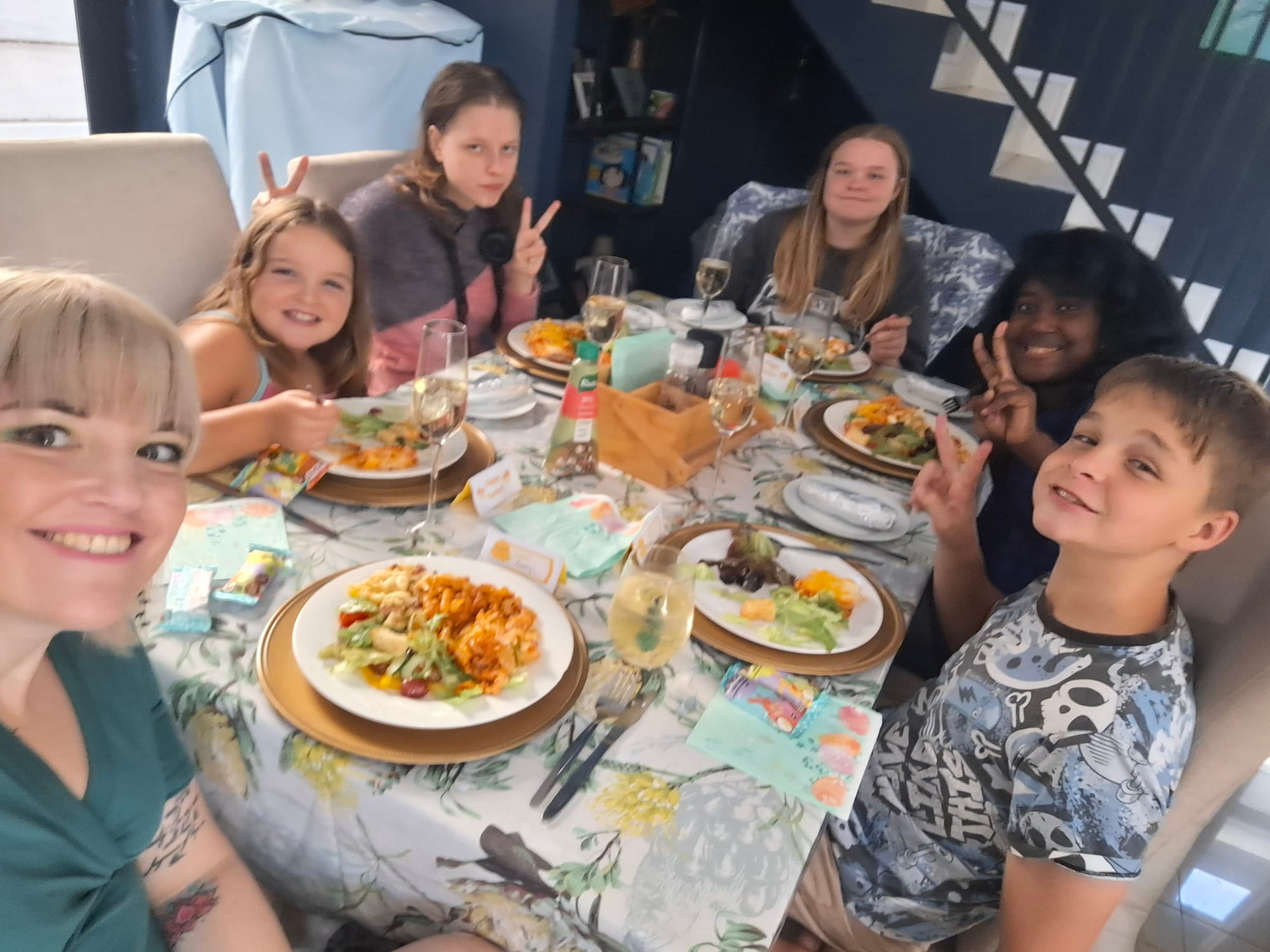
I was at dinner recently with a couple considering starting a family. They asked—knowing my "professional capacity" as an autism specialist and my "personal capacity" as a mother on the front lines—about the likelihood of their future offspring being neurodivergent. Based on their specific context, I looked them in the eye and said I could pretty much guarantee it.
The man took it like a champ; the woman looked like I’d just told her that the catering for her baby shower would be run by a pack of feral raccoons.
Naturally, my lifelong "foot-in-mouth" affliction kicked in, and I scrambled to be both placating and accurate. I explained that it’s called a spectrum because everyone presents differently. You see, the burning question parents always ask is: "Do I have to carry 'the gene' for my child to be autistic?"
Short answer? No. Long answer? Grab a glass of wine; it’s complicated.
The "It’s Not from My Side" Defense
In the world of genetics, we have Inherited Variants and De Novo Mutations. Inherited is what it sounds like—a cocktail of traits passed down.
But De Novo means "from the beginning." These are spontaneous genetic glitches that appear in the child but aren't in the parents' DNA. So, yes, you can technically be "genetically typical" and still produce a child who views a change in the brand of chicken nuggets as a declaration of war. (Apparently VisFabriek currently stocks the superior ASD friendly chicken nugget. For those of us who hugely appreciate such recommendations).
The Family Hedge
But let’s look at my own family tree, which is less of a tree and more of a beautifully tangled hedge.
My ex-husband and his brother both have ADHD; the brother also has dyslexia. On my side? My father was "incredibly naughty" and got caned regularly. Was he a rebel? Or was he just a neurodivergent kid whose teachers bored him to tears?
Then there’s me. I loved school. I excelled.
Well, except for Maths. I had a teacher at a young age who told me I wasn't "bright with numbers." Being the child of a narcissistic mother, I did what I do best: I took that negative feedback, gift-wrapped it, and integrated it into my entire belief system.
I spent high school getting 80% in everything—except Maths, where I was relegated to the back of the class. I didn’t mind; the teacher had a tendency to spit when he spoke, and moving out of the "splash zone" was a relief. He also frowned on students bringing umbrellas into the classroom, though God knows I was tempted.
I am one of those "vintage" people who was around when you could drop Maths entirely in Grade 10. I did so with the speed of a gazelle escaping a lion, switched to Business Economics, and went on to collect postgraduate qualifications like they were Pokémon cards.
Anxiety, OCD, and the Art of the Routine
Am I neurodivergent? Who knows! I’ve had severe anxiety since childhood, but I also had a rather anxiety-inducing upbringing. I carried that into adulthood, but then I married a narcissist who was autistic (undiagnosed for years) and abusive. So, is it clinical anxiety, or is it just "context"? And before you ask - yes, I am now making better life decisions.
I do have a touch of OCD. If you move a pen on my desk, I will notice. I will feel it in my soul. I’m less rigid about the rest of the house because I have three children and realized early on that "perfect" is the enemy of "sane." My house is clean, I like to be in bed by 9:00 PM, and my kids have strict bedtimes.
I’ve worked tirelessly to create three distinct routines for my three very different children. It’s a delicate ecosystem designed to ensure there are no massacres before the school drop-off. I expect them to behave, but I also subscribe to the "What happens in Vegas" philosophy of parenting: provided everyone is alive, regulated, and well, I don’t need to know every gory detail of their school day.
The "Down with Epstein" Easter Lunch
I told that terrified woman at dinner: if you had told me 16 years ago, I’d have a child with Pervasive Demand Avoidance (PDA) and the first five years would be psychological and physical warfare, I wouldn’t have been impressed.
But this week, we are having Easter lunch. With friends! Is it conventional? No. Liv’s (they/them) latest stims involve shouting "Down with Epstein!" and "I want alcohol!" Everywhere. Usually, multiple times a day. To be clear, these aren't needs. As Liv puts it, "I can’t help what comes out of my mouth." It’s unfortunate, mostly because I’m tired of the side-eye from strangers who think I’m running a very strange pub for minors. But hey, a month ago the catchphrase was "I'm going to burn everything to the ground," so I’m calling this a win.
Genetics might load the gun, but life pulls the trigger. Whether it’s inherited or a "spontaneous surprise," neurodiversity isn't a disaster—it’s just a very loud, very specific, and occasionally embarrassing way of being human.
Now, if you’ll excuse me, someone moved my make-up mirror, and I need to go have a minor breakdown. *Everyone in the attached photo is drinking NON-ALCOHOLIC champagne.