The Autonomy Architect: Why Our PDA Kids Feel Like They’re "Failing" (And How We Can Fix the Blueprint)
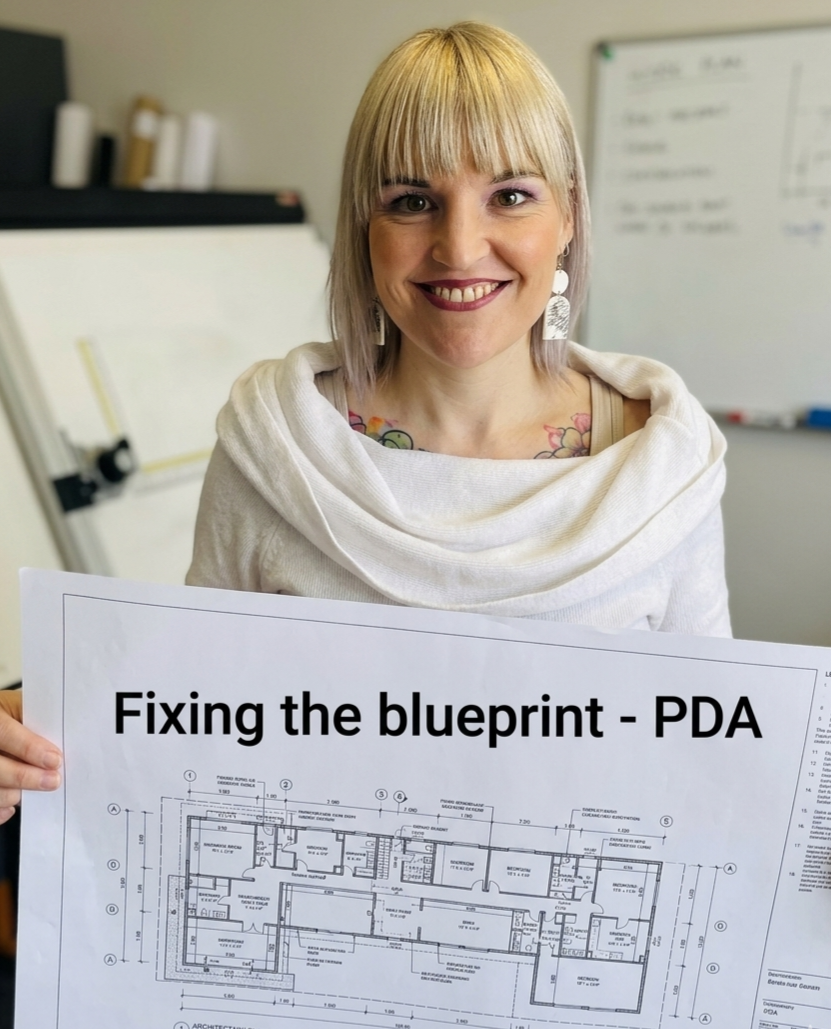
If you’ve ever tried to convince a child with Pervasive Demand Avoidance (PDA) to put on their shoes, you know it’s not a request; it’s a high-stakes diplomatic negotiation that would make the United Nations sweat. In our beautiful South Africa, where "because I said so" is practically a national Olympic sport, parenting a PDAer can feel like trying to host a quiet tea party in the middle of a Cape Town South-Easter.
But beneath the "no’s," the expert-level negotiations, and the occasional flying flip-flop, there is a quiet, often invisible struggle: a deep sense of inferiority.
The Anxiety Iceberg
For a child on the spectrum, especially those with a PDA profile, the world is built on a set of blueprints they never received. PDA is a complex profile of autism where everyday demands—from "brush your teeth" to "have a fun day at school"—are perceived by the brain not as instructions, but as physical threats to autonomy.
This isn't "naughtiness" or typical South African "gatvol" energy. It is a nervous system locked in a permanent state of fight-or-flight. When a child’s brain tells them they are "failing" at basic things their peers do with ease, a toxic "inferiority spiral" begins. They look around and see a world of people who seem to have the "user manual" for life, while they are left trying to navigate a complex highway with a map written in ancient Greek.
Why PDAers Feel the "Drop"
Low self-esteem and neurodivergence often go hand-in-hand. For PDA kids, this is amplified by three major "confidence-sappers":
- The Comparison Trap: Seeing siblings or classmates' breeze through routines makes their own internal "block" feel like a personal failure rather than a neurological one.
- The "Defiant" Label: When teachers or family members mistake anxiety for "willful defiance," the child internalizes the idea that they are "bad" or "difficult."
- Social Masking: Many PDAers are "superficially sociable." They work double-time to blend in, which is exhausting and leads to a "burnout" that makes them feel even more incapable when they finally hit a wall.
The South African Context: From Shame to Support
In South Africa, the path to understanding is often blocked by "The Stigma." We are a culture that prizes "respecting your elders," which can make the low-demand, collaborative parenting required for PDA look like "giving in" to the neighbors.
However, the tide is turning. Local resources like the Neurodiversity Centre (with hubs across the Western Cape, Gauteng, and KZN) are pioneering a shift from seeing PDA as "Pathological" to a "Persistent Drive for Autonomy." This shift is vital. When we change the language, we change the child’s internal narrative.
How to Flip the Script
To move a child from "I am broken" to "I am different," we need to be their "Safe Person."
- Use Playfulness: PDAers often respond brilliantly to humour. If a demand is a "threat," a joke is a "bridge." Instead of "Put your shoes on," try "I bet these shoes are actually lava-proof sneakers for your mission to the kitchen."
- Declarative Language: Instead of "Go wash your hands" (a direct demand), try "I noticed the soap smells like lemons today." It provides information without the "threat" of a command.
- Collaborative Problem Solving: Treat them like a partner, not a subject. Ask, "I’m worried we’ll be late for the braai. What do you think would help us get out the door faster?"
Our kids aren't "less than"; they are just wired for a different kind of world. By dropping the demands and picking up some empathy (and maybe a bit of that South African "noma kanjani" spirit), we can help them see that being a square peg isn't a flaw—it just means they weren't meant for a round hole.