ADHD: From Death-Bed Prophecies to Tuckshop Math Whiz (A Survivor’s Guide)
When my son was first diagnosed with ADHD, I’ll admit, I was operating on the "standard edition" understanding of the condition. You know the one: the "squirrel!" internal monologue, a bit of fidgeting, and a general inability to stay focused on anything less stimulating than a high-speed car chase.
As an educator of twenty years, you’d think I’d have known better, but life has a funny way of humbling you—usually through your own offspring.
I quickly learned that ADHD isn't just a lack of focus; it’s a complex, multi-layered "buy one, get ten free" deal of neurodiversity.
The Filter (Or Lack Thereof)
One of the most "memorable" milestones in our journey was the Great Grandfather Incident. My son was about four or five, a tender age where honesty is as sharp as a professional chef’s knife. We were visiting my grandfather, who was, to put it delicately, quite close to the finish line.My son took one look at him—very matter-of-factly, as if checking the expiration date on a carton of milk—and informed him that his death was, in fact, very imminent. He then turned to my grandmother and told her to "be ready for the big day."I didn't know my legs were capable of such velocity as I hustled him out of the room. He wasn't being nasty; he was just reporting the news. But needless to say, much offense was taken, and I spent the car ride home wondering if I could claim "temporary insanity" on behalf of a preschooler.
The Struggles: From Fawning to "The Dys-Family"
Beyond the accidental death-bed prophecies, we hit some real walls. My son went through a significant struggle with fawning—a trauma response often overlooked in ADHD. Because of his social anxiety and an intense desire to be liked, he would abandon his own needs just to appease others.
Then came the aggressive phase. We tried Risperdal, which resulted in significant weight gain but didn't solve the underlying "why."
It was only through my own deep dive into the spectrum and PDA (Pervasive Demand Avoidance) that I realized we needed a change in scenery—specifically, my strategy at home.
Today, we’ve ditched the heavy meds. He’s healthy, happy, and only takes Ritalin on school days—mostly so his teachers don’t decide to relocate to a different hemisphere.
My workshops are essentially a highlight reel of the "trial and error" that led us here.We also have a permanent residency with the "Dys" family:Dyspraxia: Coordination is a... suggestion.Dysgraphia: His handwriting has improved, though his teachers still deserve a Nobel Prize in Cryptography for deciphering it.Dyscalculia: Interestingly, while he uses voice-to-text for reading, his math confidence has skyrocketed.
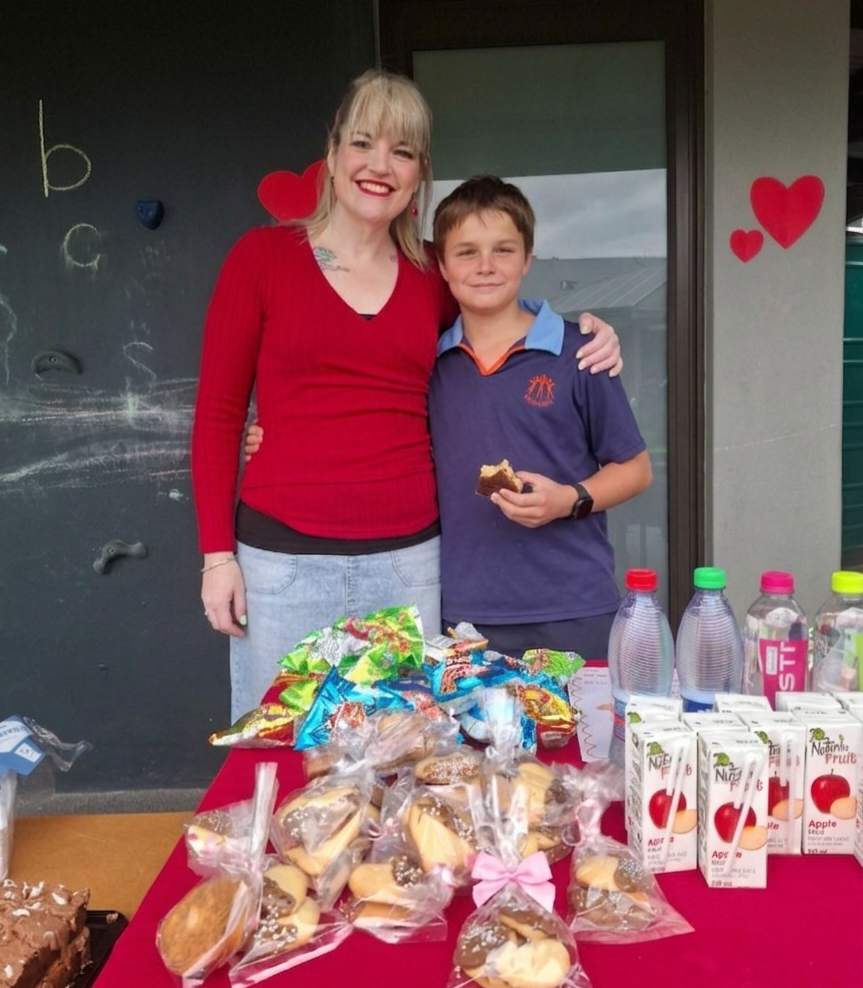
We run the school tuckshop on Fridays, and while I’m frantically stabbing at a calculator like it’s a life-support machine, he’s doing every calculation in his head. I check them. He’s never been wrong. It’s annoying, really.
The Reality: Puberty and Empathy
We are currently navigating the "Unfun Zone" otherwise known as puberty. His voice is dropping, his peers are impressed, and his moodiness is... well, it’s a lot.In this house, "moody" is a one-way ticket to your room to de-escalate. "See ya!"
But beneath the changing voice and the occasional teenage gloom, he is the kindest, most empathetic soul I know. He is my number one supporter and a fierce advocate for everyone around him. He also inherited my sense of humor, which means we spend a lot of time joking around at his siblings’ expense. Don't feel bad for them; they usually deserve it.
The Bottom Line
According to current research, ADHD affects roughly 5% of children globally, and about 21% of those children also carry an autism diagnosis. It’s a package deal that involves changes in the prefrontal cortex (the brain’s CEO) and a chronic shortage of dopamine (the brain's reward chemical).
Understanding the "why" behind the "what" changed everything for us. Whether you’re a parent, a nurse, or a caregiver, remember: ADHD isn't a deficit of character; it’s a different way of processing the world.Sometimes that world includes telling your grandfather he’s about to meet his maker, and sometimes it includes being the smartest, most empathetic kid in the room.I’ll take both. Just maybe with a little more cardio for the next "exit stage left" moment.
Andrea Grant (me) am a two-time award-winning writer for Autism Parenting Magazine and the founder of Parenting on the Spectrum. When I'm not running workshops, I am likely being out-smarted by my son at the Friday tuckshop.